

One of the most powerful of all creative urges is to memorialize. Modeste Mussorgsky produced his Pictures at an Exhibition to perpetuate the memory of a friend. In the process, he created a monument far more massive and lasting than his subject. Mussorgsky was an ardent Russian nationalist, from my window inTribeca- photo by marguerita
 The home I had began to build.The blue door I painted,the walls and the floor I created and put down with my own hands,my love for a man who never was able to understand ,the family I devoted myself and my art....I must remind myself:
Haiti and me: We’re strong, and despite the hunger, despite the poverty, despite all the problems, we’ll make it through.”Being the daughter of two Holocaust survivors,having no family alive, I lost my father at 17,became a mother to my own mother, I adored my parents, lost them and my husband, and children who turned out like him are to be considered gone from my life.Like an Earthquake, a man incapable of loving and being gentle,in fact otherwise, I am in grief.
 collage/drawing/photos by marguerita
 The results can range from the trivial statues of mounted generals that clutter our parks to the awe of the Pyramids. Yet, perhaps the most powerful creations are those which try to overcome a grievous personal loss by immortalizing the evanescent.
Yet, his soul was far less complacent than one would expect from a life-long bureaucrat – he lived in a commune and the radical ideology he absorbed there infused his music, as he devoted himself to seeking truth in art by crafting a natural style without classical artifice.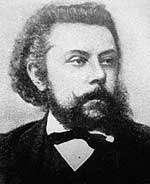
Modeste Mussorgsky
Victor Hartmann was a close friend who shared Mussorgsky's ideals in his own field of architecture and painting.
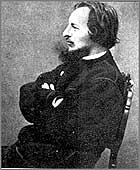 Victor Hartmann |
The ten pictures Mussorgsky depicts are: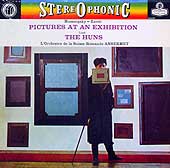 a gnome-shaped nutcracker; a troubadour plaintively singing outside an ancient castle; children vigorously playing and quarrelling in a park; a lumbering wooden Polish ox-cart; a ballet of peeping chicks as they hatch from their shells; an argument between two Warsaw Jews, one haughty and vain, the other poor and garrulous; shrill women and vendors in a crowded marketplace; the eerie, echoing gloom of catacombs beneath Paris; the hut of a grotesque bone-chomping witch of Russian folk-lore; and a design for an entrance gate to Kiev. Mussorgsky clearly chose these subjects for the variety of moods they invoked and the opportunities they presented for a wide array of musical depictions.


